
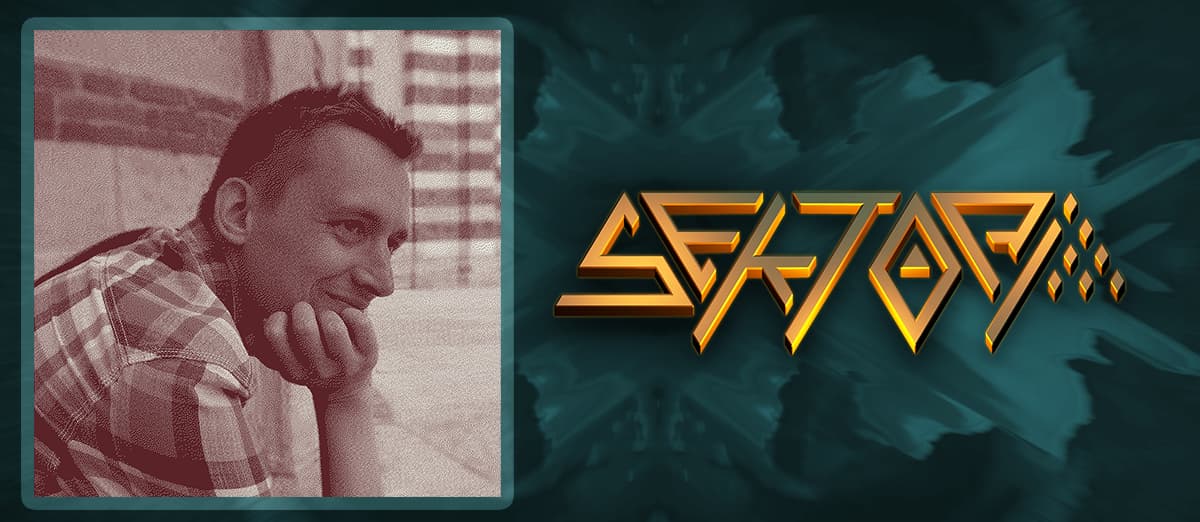
Twin-stick shooter Sektori made its debut in November of last year, immediately catching my eye.
I’ve been something of a sucker for all-things arcade shooter ever since Geometry Wars got its hooks into me during the Xbox 360 era. Sadly though, Sektori’s late 2025 debut was on everything but Nintendo. I watched from the sidelines — as the shooter, complete with its pounding techno soundtrack and intense, almost psychedelic, visuals gained plenty of praise from PS5, Xbox and Steam players — leaving me hoping, yearning almost, that the captivating fast-paced, bullet-hell action on offer would one day find its way over to Nintendo’s hybrid machine. It’s very much my jam.
Thankfully, that day has come, as just over six months on, this arcade gem is now available on the Switch 2, and it’s a game well worth talking about.
It was made by just one person: Kimmo Lahtinen, a Finnish indie developer, who prior to going independent spent over a decade at Housemarque, the studio behind the likes of Super Stardust HD, Resogun, Returnal, and Saros.
Lahtinen’s work on Sektori began in April of 2021 — initially as a simple shooter, but soon growing in scope. Over the course of four and a half years, it evolved into the ambitious shooter that’s available today.
I spoke with Lahtinen about the game’s development, its fast-paced techno tendencies, and its arrival on the Nintendo Switch 2.
A week after Sektori’s initial November 2025 launch, Lahtinen posted candidly on Bluesky about the financial reality of the past near half decade of work. The game was doing well, but after multiple years in development, Lahtinen noted that Sektori was “just about nearing recoup” on its development costs and overheads, but that still left him in a position of seeing essentially “zero salary for 4.5 years“.
Six months later, ahead of the Switch 2 debut, things look a bit rosier. He tells me that looking back “the launch went better than I could’ve ever hoped for“.
Hanafuda Report: “You’ve been very open about the challenging economics of developing Sektori. With some distance now from that first, original launch, how do you reflect on it?“
Kimmo Lahtinen: “I fully expected to be out of the indie business after the original launch, so I’m very grateful for the reception, and that I’m still here doing my thing“.
It turns out that warm reception is what made this eventual Switch 2 version possible.
See, bringing the game to the original Switch was Lahtinen’s initial plan for a Nintendo port all along (he’d shipped Barbearian to the platform previously) but it sadly proved “a bit too challenging” — mainly due to performance reasons. Not only that, but a path to a Switch 2 release wasn’t clear either at the time as “Switch 2 development kits weren’t easy to come by for an unknown indie developer“.
Glowing critical acclaim, along with enthusiastic reaction from players, changed that:
Kimmo Lahtinen: “Fortunately the positive reception was convincing enough, so I could get in as a Switch 2 developer and make this port. I would’ve loved to have shipped it simultaneously with the others, but better late than never“.
He notes that he carried out the work on this Switch 2 port himself, finding it to be an overall smooth experience — adding that beyond some additional CPU optimisations, the hardware was up to it: “This game needs a steady 60FPS and Switch 2 was fortunately up to the task.“
“Switch 2 is really a great fit for the game, so I’m super happy to get it out there.” — Kimmo Lahtinen
Sektori’s development diary — a GIF-filled document Lahtinen published charting the entire journey of making the game — is an illuminating account of how a game can come together. It’s full of moments where he knew he could have wrapped things up, and yet chose not to. New bosses, enemies, an extra mode, alternate ships, fresh customisation options, and more.
With 25 years of industry experience, Lahtinen of course knows how to scope a project. So, I asked him about that experience, and how it can play out differently when working solo.
Hanafuda Report: “When you’re the only person in the room, is giving yourself that licence the best decision you made on Sektori, or the most dangerous one?”
Kimmo Lahtinen: “With that kind of freedom you can fall into the trap of not seeing where you’re going if you don’t have much experience in the industry. It was never the case for me that I didn’t know what I would need to do to wrap things up. I didn’t really have many unknowns in the project, besides standard design problems, as it’s a very established genre and I’ve done games like this before.”
“My thinking was mostly that if I’m going out, I’m going out with the best work I can do with no compromises. There’s always this lingering feeling when you finish games, that ‘I wish we did that’ — but I don’t really have those with this game. I’m quite happy with it! I also feel very fortunate that I was able to give it so much time.”
As a solo developer working on something in relative isolation for so long, I asked Lahtinen if there were any stretches where the project was in doubt, or hit any notable stumbling blocks.
Kimmo Lahtinen: “When you work on something for so long, of course there are hard times. But that’s only part of the natural flow of a project. Ups and downs. It’s your work ethic that keeps you going when your pure motivation doesn’t.“
“I don’t think there was ever any doubt I would get it finished. The deadline was basically when I needed to stop financially. I’m also not a person who would ruin themselves chasing a dream.“
He adds that, if anything, it was the card-based upgrade system that was the hardest design problem to crack — even questioning if it should remain in the game:
Kimmo Lahtinen: “There were many versions of that and even quite late in the project it was not clear to me if I should even have card based upgrades in the game, but I’m quite happy with what came of it at the end.“
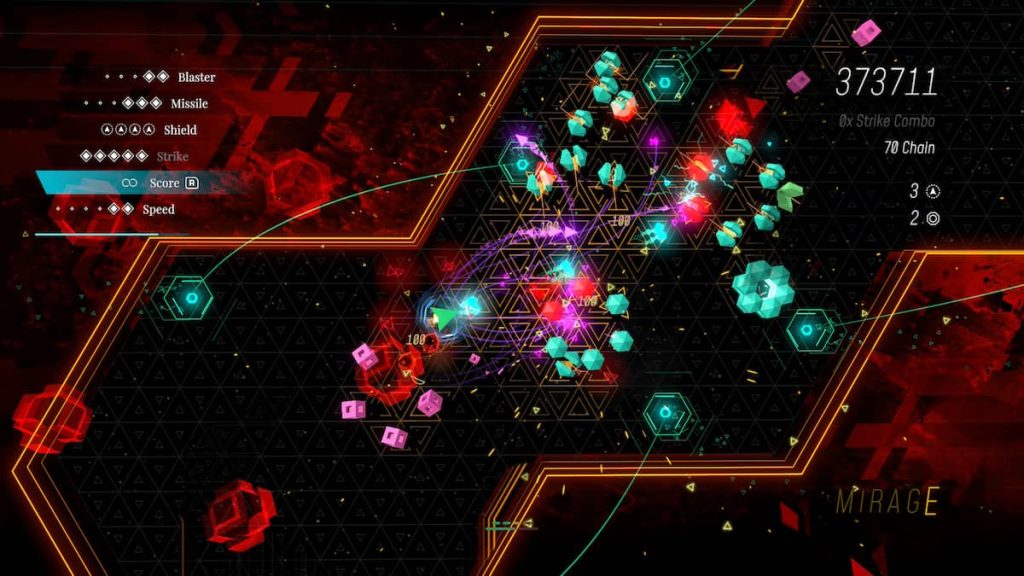
If you’ve paid any attention to Sektori prior to this Switch 2 release you’ll likely know that the game often draws comparisons to two other shooters. One is Resogun, which Lahtinen himself worked on whilst at Housemarque.
Hanafuda Report: “Sektori often gets compared favourably to Resogun, but it’s also a comparison being made against something you yourself worked on in a previous role. How do you feel about that as a shorthand?”
Kimmo Lahtinen: “It’s an easy reference to make as I have that in my backstory. Resogun was a team effort, but I’m sure there are some of my fingerprints that show through in that, same as in games I’ve done as an indie.”
The other point of comparison? Geometry Wars.
Like I alluded to earlier, I spent an embarrassing amount of time with Geometry Wars back in the day, so Sektori had my interest from the first screenshot. I told Kimmo about this shared appeal, asking whether he found the comparison reductive, or simply flattering.
Kimmo Lahtinen: “Geometry Wars had such a big impact on everyone that it’s only natural to refer to it when trying to find a common language. I never played Geometry Wars that much, but obviously I’ve borrowed ideas from it too as I’ve done from many other games“.
The exceptional soundtrack at the heart of Sektori was created by Lahtinen’s brother, who goes by Tommy Baynen. It’s track after track of proper techno (I was thrilled to find it available on Apple Music and elsewhere).
Hanafuda Report: “How does that creative relationship actually function in practice? Does having a sibling as your composer change the dynamic compared to a more formal collaboration?“
Kimmo Lahtinen: “Working with my brother is a million times easier than with anyone else. I basically function as a music director, find references and so on and then let him do his thing. When a track comes back I try to figure out if it’s working and where to put it and so on. It’s a very casual relationship, free of drama.“
Hanafuda Report: “Was the techno and audio identity always the plan for Sektori, or did it emerge as the game took shape? At what point did it stop being a soundtrack choice and become the actual design language of the whole thing?“
Turns out the techno identity that runs throughout Sektori was always the intention — and acted as something of a North Star. Lahtinen notes that “Techno was there from day zero and everything was influenced by it.”
Kimmo Lahtinen: “I love electronic music and it’s a genre close to my heart. I also felt techno has been done a disservice by games before — so I wanted to get deep into it and do something authentic.”
“The music is really built to function like a DJ set that you go on a ride with, I think you can kind of think of the game as such too.“
There’s a small, subtle detail buried in Sektori that speaks to this depth — the music actually rises by a single BPM with every level transition. Most players will probably never consciously notice it, but they’ll likely feel it. It’s a smart way of gradually turning up the heat on things. Lahtinen says as much, noting it’s “just one little thing among all that chaos that should come together to form a cohesive experience“.
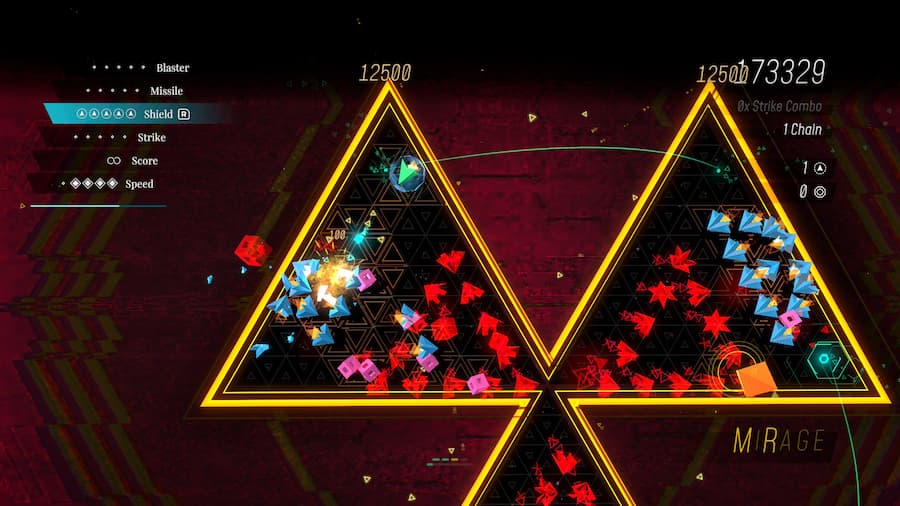
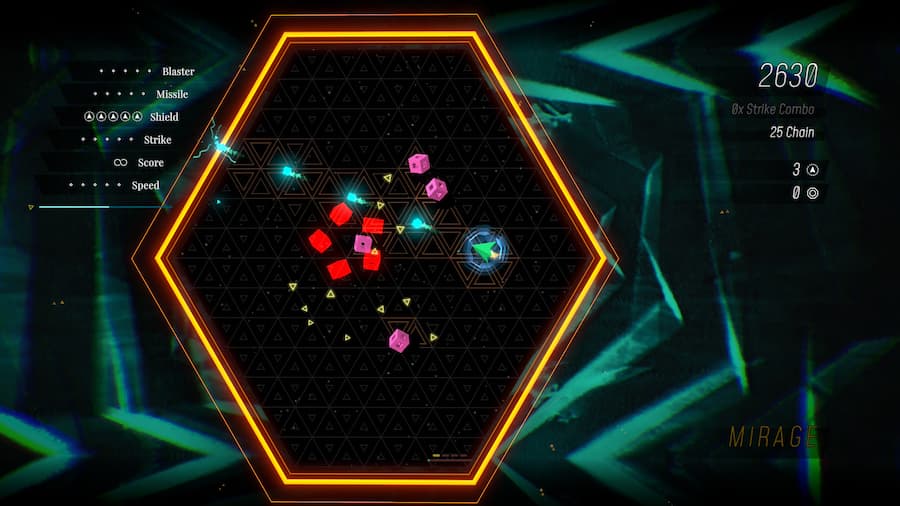
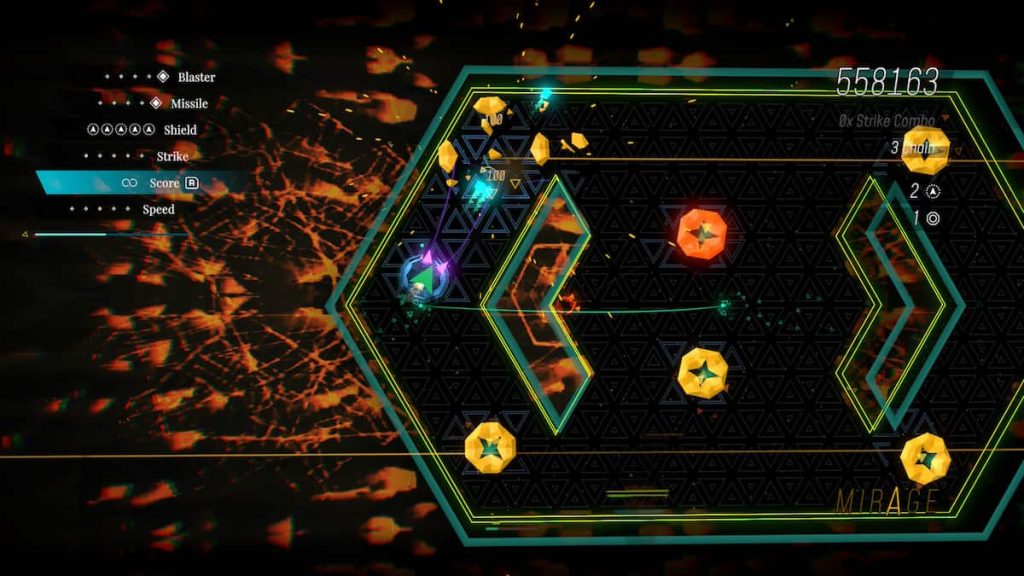
Talking of chaos, the screen in Sektori gets genuinely intense. There’s a ton of vivid colour and constant movement always on screen, with enemies and effects all simultaneously dancing around the arena. I ask how he keeps such a busy, kaleidoscopic display readable, without it tipping into frustration.
Hanafuda Report: “How do you balance that visual density while keeping things readable enough to not frustrate? Was the smaller handheld experience a consideration here?“
Kimmo Lahtinen: “It’s a million little things. When things explode, don’t keep the debris lingering to obscure other important things — throw it away from the player. When you do colours, they must be instantly recognisable for what they mean. Enemies have to have clear silhouettes so you instantly know the type of incoming danger. If something potentially dangerous is about to happen, give a fair warning beforehand.“
He also highlights the death replay screen — a welcome feature which shows you a quick, instant recap of exactly what killed you — as something which kept him honest during development. If he ever felt like a death was particularly ‘unfair’, the replay served as an immediate bit of visual feedback for what to go and fine tune or fix.
Kimmo Lahtinen: “It’s also good for the player to show what actually happened to curb that frustration when you think you got unfairly destroyed.“
It’s worth noting for Switch 2 players coming in fresh, that Sektori is not going to hold your hand: “A lot of modern games have this tendency of dragging you onwards, underestimating the intelligence of the player,” Lahtinen says. “This is not that game. You need to be aware of what’s happening and how things work. But once it starts clicking, I feel it also rewards you.“
Hanafuda Report: “After spending years making a game about pure focus, pressure, and survival – what did Sektori teach you about your own limits as a developer?“
Kimmo Lahtinen: “You learn quite a lot with each game. I think this is a game that has taught me most about pure game design so far. So many tricky problems and systems to solve and balance.”
“There’s also this lingering feeling that after making a game that’s so well received, what do I do now? Can I actually do it again? Probably not, but I’m sure I will try!“
Hanafuda Report: “What are you actually playing at the moment, if anything? Do you get to enjoy other people’s games for what they are, or does your brain not really switch off from the mechanics of it all?”
Kimmo Lahtinen: “I do sometimes find it hard to play games these days just purely for fun. There are a lot of games where you open the game, play for fifteen minutes and you can already see the whole textbook design to the end. These games lose any appeal to me quite fast. But I do still enjoy games! Currently I’m playing The Drifter, which is excellent, and I also just started Death Stranding 2. I also just finished an epic Factorio co-op campaign with a friend — that game is a masterpiece.”
I end by asking what a successful Switch 2 release looks like to him — not just commercially, but personally. Lahtinen notes that to start he’s just pleased to see it now available on Nintendo’s machine:
Kimmo Lahtinen: “It’s been asked of me so many times, that I’m really happy to get it out there! It’s a great platform and Sektori feels right at home on it.“
“A successful release to me is that I receive an e-mail or two from players who are happy with the game. I don’t really have any expectations beyond that.”
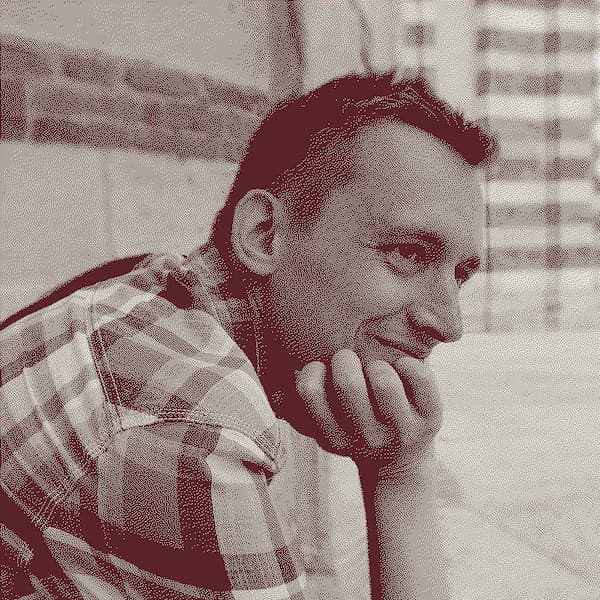
My thanks to Kimmo Lahtinen for taking the time to talk to me about Sektori.
Sektori is available now on Switch 2 for $14.99/€14.99/£13.49.
Comments
Support Hanafuda Report
Comments are only available to members.
If you’d like to sign up to Hanafuda Club, click the button below: