
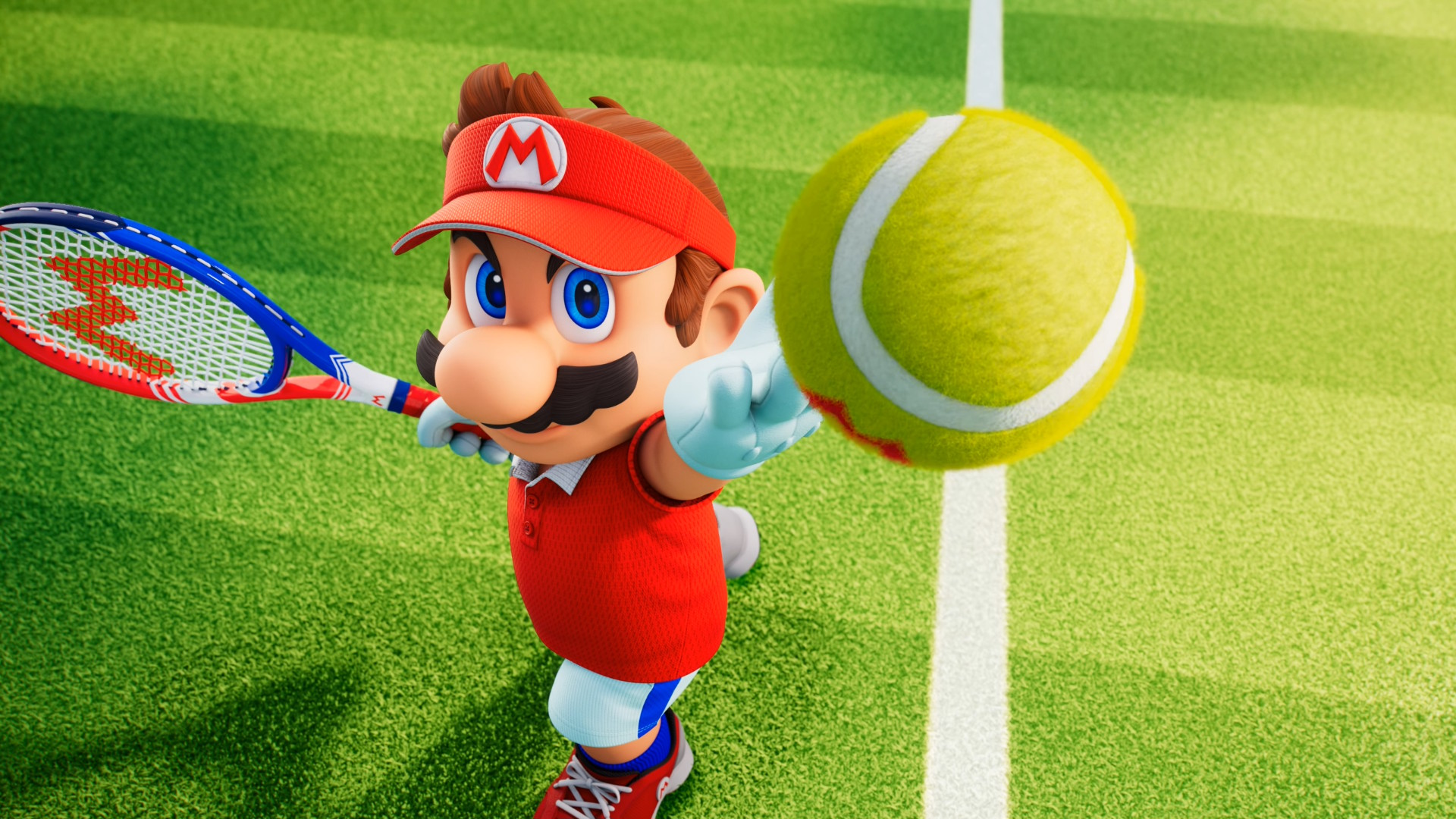
The slick opening cinematic of Mario Tennis Fever excitedly shows off the new gimmick that’s core to the experience of the entire game — that is, of course, the new fever abilities, made available via a collection of new tennis rackets that feature unique and often wacky power-ups, most of which severely alter the state of play. This flashy, fast-paced cutscene does a good job of whetting your appetite and getting excitement levels up for what is to come — but after viewing it, you’re put into a typical introductory tutorial, which basically acts as a dull training exercise to give you an idea of the basics. Standard stuff, and I get why it’s here, but it serves as a bit of a gear change during the opening minutes.
After the brief tutorial, you’re placed at the main menu, and it’s here where the Adventure mode is the first, pre-selected option that you’ll see. This user interface choice sends a signal to any layperson that this is where they should head next. Of course, anybody who’s played enough sports titles will know that you don’t come to such games for the single-player content. It’s the multiplayer that’s the real draw, and while that’s true with Mario Tennis Fever, I’d wager that the default pre-selection of the single-player mode will guide most players down that path, so that’s where I’ll start.
The main single-player experience found within Mario Tennis Fever takes around four hours to work through, and it kicks off with a fun-enough, moderately amusing cutscene in which you see Mario and his friends get turned into babies. Undoing this infant transformation functions as the main rationale for the story mode. Because you are now a baby, your once-pro tennis ability has apparently now all but vanished, meaning you need to go back to school and hone your on-court skills once again.
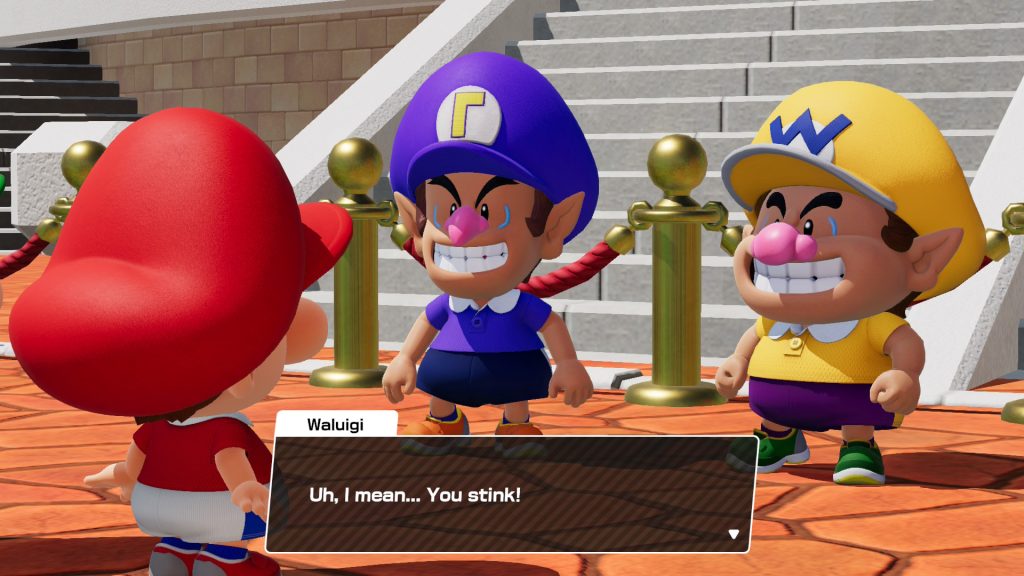
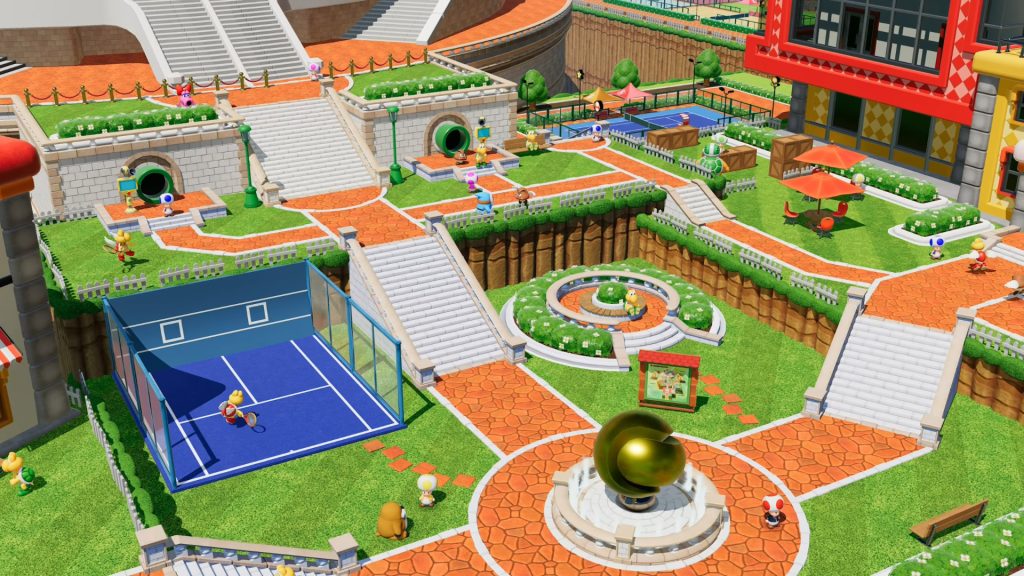
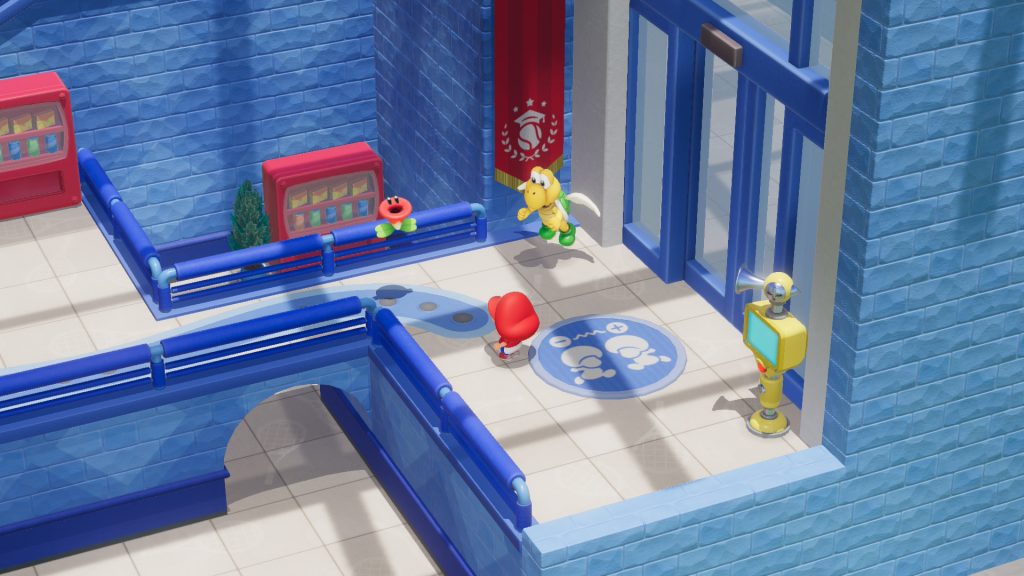
Sadly, though, the bulk of the ‘back-to-school’ assignments you’re given at this flashy tennis academy play out like yet more rote tutorials. You’re given the freedom to walk around an admittedly pretty nice-looking (yet somewhat sterile) tennis school environment, but there’s nothing to do in this open space beyond running from one predetermined spot to another to start the next bit of busywork.
It’s a shame to see such a wasted opportunity, as it would have been nice to approach one of the many Mushroom Kingdom characters dotted around the school and have some genuine tennis interactions with them — beyond just a scripted line of unchanging text. Instead, we’re treated to a world that feels like a facade for what could have been a checklist menu — now, I’m not saying I would have preferred that, but this does feel like it’s all rather half-baked. The initial academy space you walk around could have been a fun spot to explore, but when you can’t even pull out your racket at will to lob a ball against a wall, the sparseness of the experience is pretty clear.
Once you do walk over to the next checkpoint, you’ll be tasked with either learning some basic shots and strokes or taking on one of a collection of what feel like underdeveloped Mario Party mini-games, all with some loose tennis connection. Once you’ve cleared a task, helped by way of some faux encouragement from that annoying Talking Flower (that Nintendo seem really keen to make a thing), your stats will level up. Apparently, Baby Mario should now feel notably better at lobbing a ball around the court. This stat progression feels entirely fabricated, though — sure, I levelled up, but this didn’t seem to result in any discernible gameplay difference. Complete task, play a mini-game, take a quick quiz, repeat. It’s mundane, padded and quickly bores.
The repetitive nature of the Tennis Academy gameplay isn’t helped by the monotonous delivery of the characters within it — the voice acting just seems to be a repeat of the same three or four sound bites. It’s a small thing to complain about, but when the gameplay is humdrum, other tiresome elements of the experience grate just that little bit more.
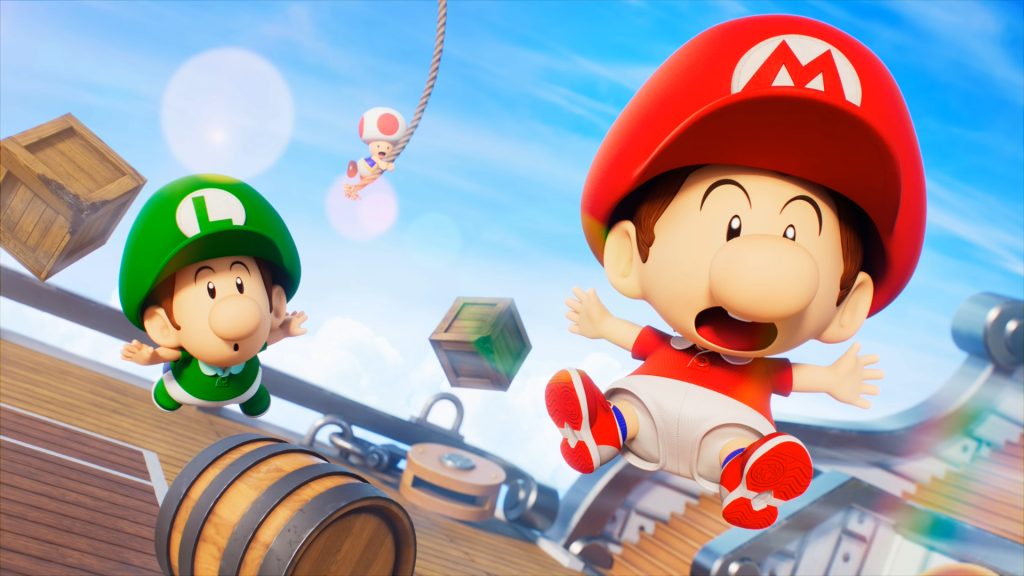
After you’re done at the tedious Tennis Academy, things thankfully open up a little in the single-player mode, with Baby Mario and pals taking to an airship to explore a wider area. It’s at this point that the Adventure mode does get a touch more varied and interesting, mixing in new areas to work through, and original boss encounters that mix up the gameplay and task you with using your newfound tennis knowledge. It’s good fun, but not good enough to justify the academic slog to get there. The adventure mode on offer here rarely surprises, is on the whole underwhelming and seems a tad dated.
There is some padding to the single-player content, by way of challenge modes and tournaments, along with some achievements to collect — but on the whole, this is a weak single-player experience that feels somewhat underdeveloped.
Thankfully, the multiplayer component is a more compelling offering, with both ranked and casual online play options on offer, along with local multiplayer options.
The multiplayer is where the core experience of actually playing some decent arcade tennis can be found — you’ll actually get in some solid rallies here, unlike in the ridiculously easy single-player mode.
When entering a multiplayer match, you can choose to play with the new fever rackets or without. Mario games are famous for fun power-ups that alter the gameplay in exciting or surprising ways, and the fever rackets are clearly reaching for that tradition. Now, I gave the new gimmick a fair shake, but it didn’t really work for me. There’s a lot of fever rackets to unlock here, and most alter the state of play in some novel, unique, or fun way. A lightning racket, for example, can stun your opponent briefly with a flash of lightning, cutting their chances of getting in a return shot. One can throw sticky mud on the court, slowing movement down; another will throw ice ball hazards at your rival, whereas one will spray fire across the court.
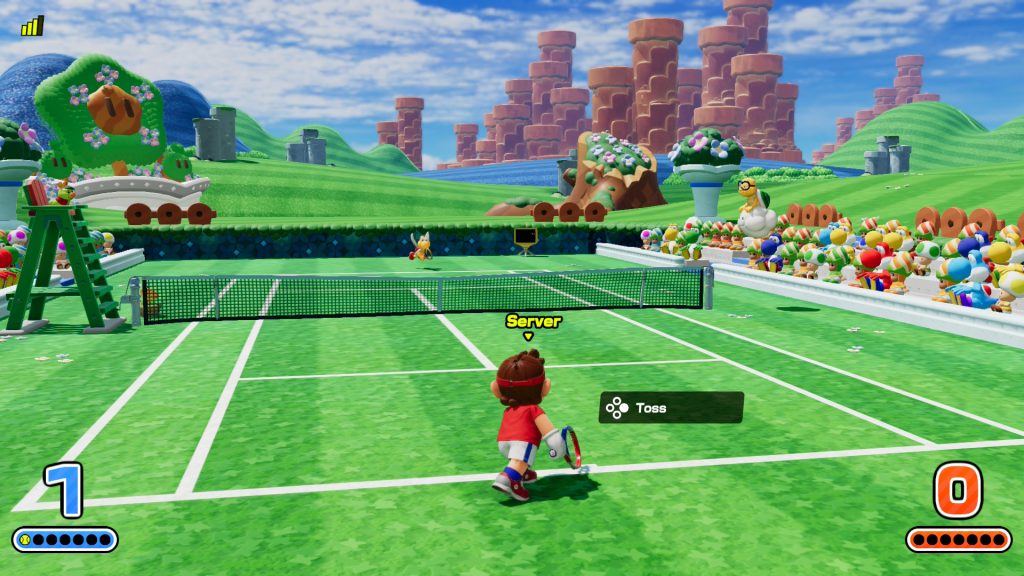
Most of these rackets add an additional level of chaotic challenge to the usual gameplay, giving you one extra thing to handle among the back and forth of a good rally. However, some of the rackets seem overly intrusive, adding stage hazards that feel almost impossible to avoid. The fever racket effects aren’t particularly well telegraphed to the player either, meaning it can be tough to know what you’re up against. This lack of clarity adds to the probability of an effect taking you by total surprise, and you being ill-equipped to counter it — you can’t swap to a new racket mid-game in an attempt to counter what’s in the hands of your opponent.
With 30 rackets and an even wider roster of characters to match, there are a lot of variables at play here. I’d often welcome such variety, but the balancing doesn’t feel quite right. Amusing and frantic in places, frustrating in others. I think for some, this new fever mechanic and the variety it opens up adds a diverse bit of depth to an otherwise shallow game. The fever rackets bring a ruthless level of energy that’s admittedly unique, but with so many wacky add-ons, I felt that the core sport gets lost somewhat in among the nonsense. It’s a tennis game with a chaotic energy that can easily trip into maddening mischief — what your tolerance for that is depends on how much you’ll get out of it.
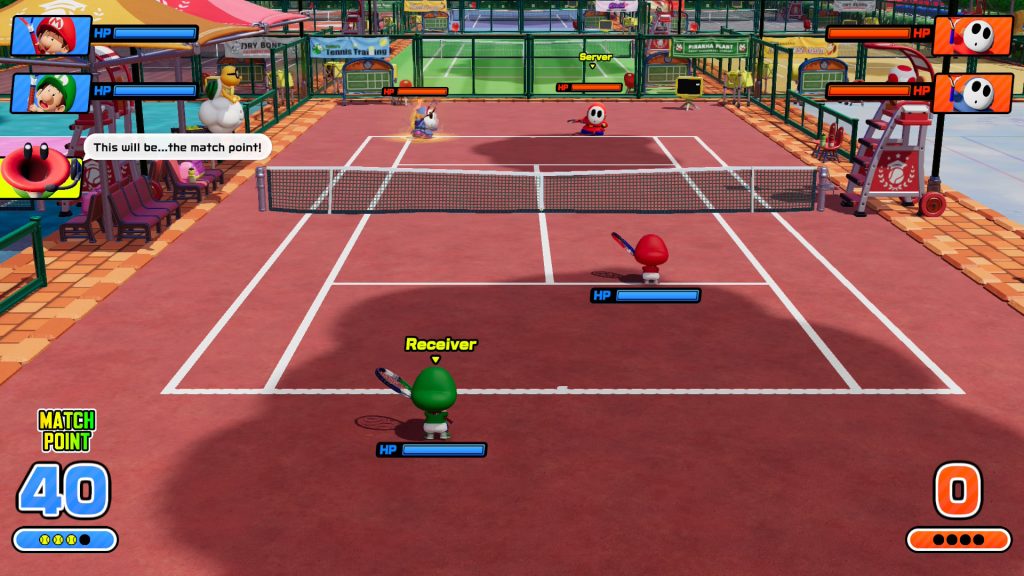
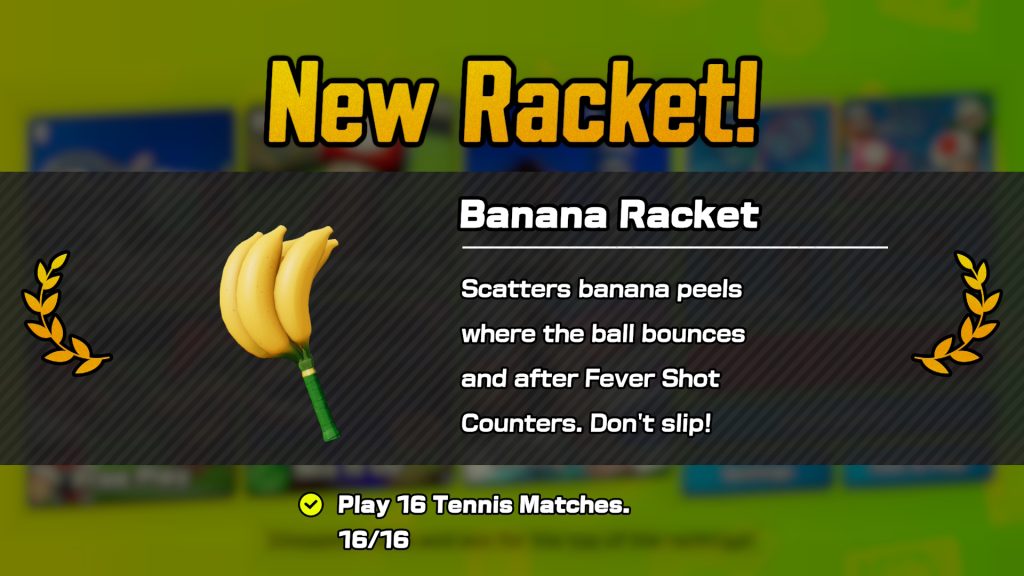
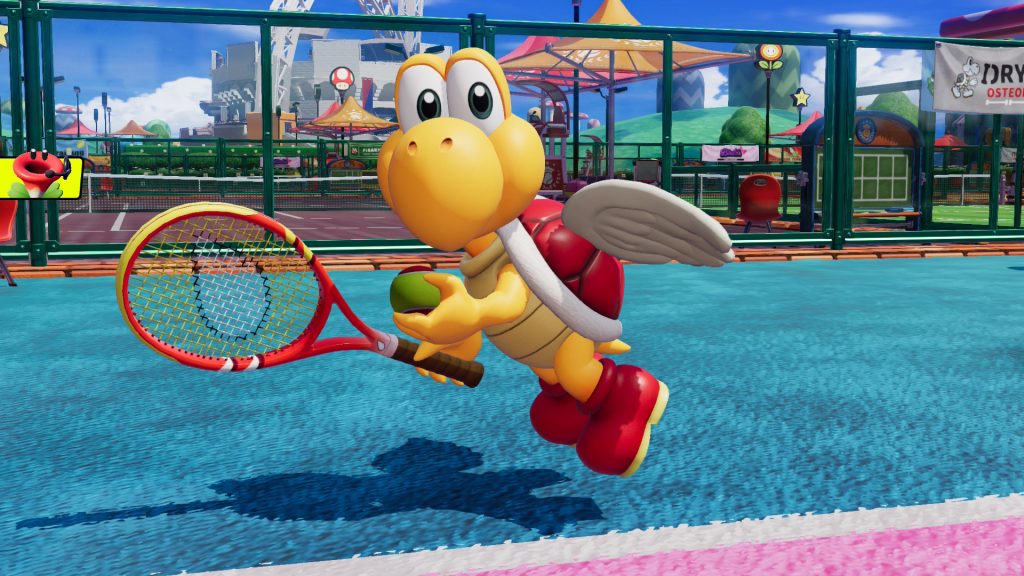
If the crazy, over-the-top fever mode, complete with its bewildering array of options, isn’t for you, there’s always regular play. The normal mode is solid stuff, stripped back, and simple — it’s here where I had the most fun with Mario Tennis Fever, but it’s also the most familiar, so retreating to what’s familiar, tried, and tested isn’t overly surprising. Maybe I’m the boring one, but with a wholly uninspiring single player, and the novelty of the fever rackets not feeling well-balanced, I came away somewhat disappointed. If you’ve still got Aces on the original Switch, I’d stick with that. This new Switch 2 entry doesn’t do enough to set it apart to make it easy to recommend — the upgrade just isn’t compelling enough.
Mario Tennis Fever has all the components needed for a great sequel, but the balance is off — the single player is undercooked, while the fever rackets are overdone. If you’re coming to this fresh, there’s fun to be had; if you’re coming from Aces, there’s not enough here to justify the switch.