
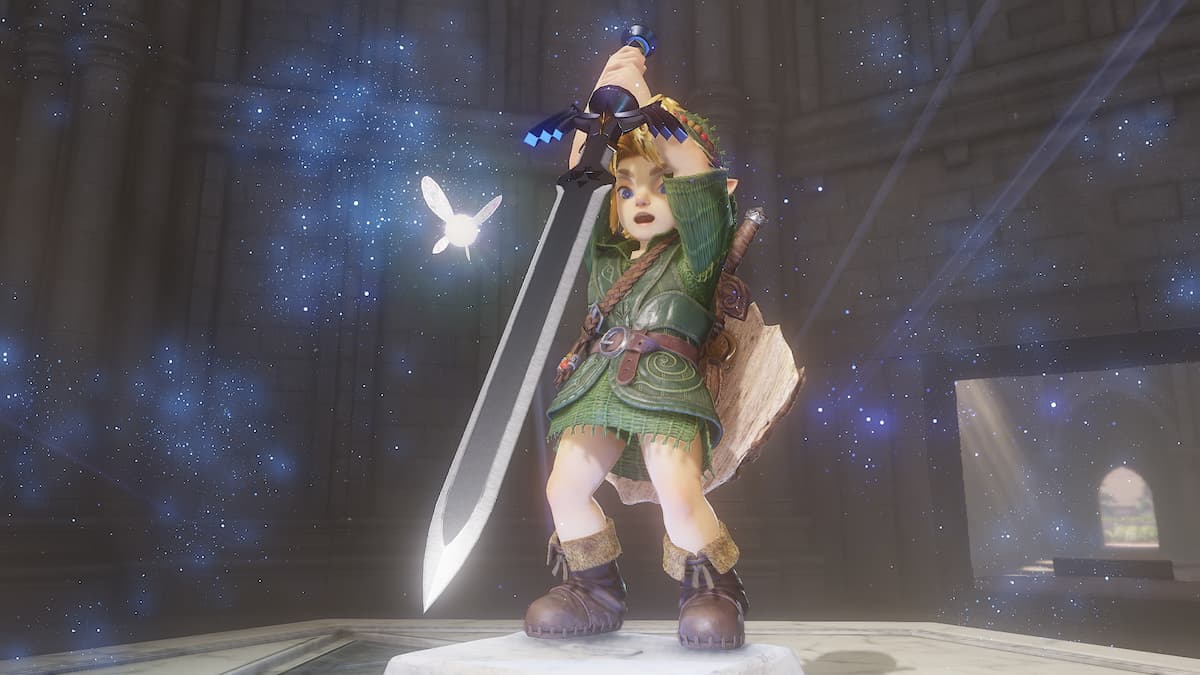
Like many others no doubt, I went through a few different feelings on first seeing the look Nintendo have decided upon for this Switch 2 Ocarina of Time remake when they showed it off in a special Direct presentation earlier this week. A remake of a game with such immense reverence and prestige was always gonna draw a much more critical eye.
The main thing I’ve seen thrown at the visual style? Well, mainly folks comparing it to the various fan-made ultra-detailed ‘trailers’ we’ve seen over the past twenty or so years. Trailers often accompanied by a slew of, some sincere others more tongue-in-cheek, of “hire this man”.
But, the countless ‘hire this man’ takes we’ve seen are boring. Sure, it’s an easy thing to reach for by way of an initial comparison, but if you take more than five seconds earnestly looking at this new Zelda remake it’s clearly something more than that. Something different.
See, Ocarina of Time, the original N64 one from 1998, had a stylised look that was unique — not only in its visual appearance, but also in how the technology of the time made it what it was. You had a mix of open areas, low on detail and texture, but still capable of evoking a sense of place. These were seen alongside pre-rendered scenes that you could walk through (such as the market in Castle town) — these seemed notably more realistic and true-to-life by comparison. The pre-rendered areas made for convincing little vignettes, placed throughout the game, which stood in contrast to the dungeons, open fields, and valleys.
In hindsight it’s something of an odd blend. But, your ten year old brain probably took these two disparate styles, and accepted them as one. Any detail you can look back at now and think of as missing, was then just magically filled in by an active and willing imagination.
In the same way that Super Mario Bros. 3 is said to be a stage play, and Miyamoto reportedly has a keen interest in puppetry (something recently highlighted by one former Nintendo staffer), these games are and always have been toys with which we are playing. Realism isn’t the end goal here, play is.
As such, the highly realistic style of the countless Unreal Engine demos we’ve seen over the years was never the point. Nintendo themselves would show off impressive ‘future’ visions of Zelda (at Spaceworld and E3) as a way to tease what their latest hardware could do. But when the actual retail games rolled around that tech demo fidelity was gone, losing out to what mattered: the gameplay. Nothing got in the way of gameplay.
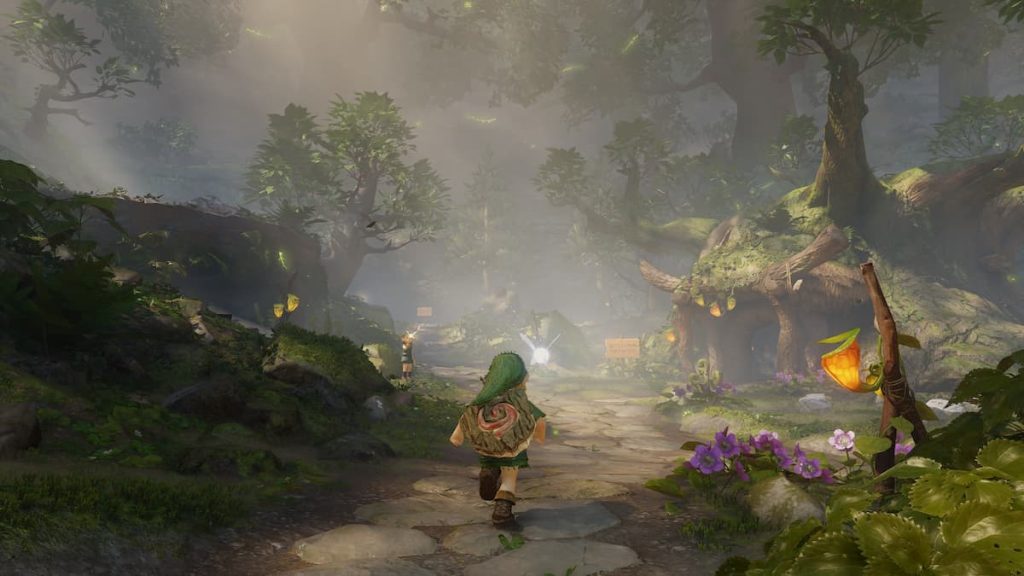
So, what should we make of this new maximalist take on Ocarina of Time then?
Sure, you can crank up the details, but it’s not to achieve some paramount level of realism. Kokiri Forest should not be a facsimile of a real woodland, Young Link should not be a mirror-image of a real human child. Instead, it’s a world of fantasy and fairy tale that’s now packed to bursting with curious details to admire. These details don’t have to make sense, they don’t have to be correct or logical, they just have to invoke a sense of wonder within the game as a whole.
Protagonist Link has an almost doll like appearance in this 2026 remake, with a glossy face and dressed up in an almost theatrical style. It’s all based on play. Do you want a lifelike little boy swinging his sword and slicing up a convincing looking chicken (no thanks), or do you want a tailored approach to such moments, where a fairy tale avatar can take swings at a cartoonish Cucco.
Unlike the relative simplicity of the original, Ocarina of Time for the Nintendo Switch 2 leans on this maximalist look, and this is not to be confused with the realism zenith that many of the Unreal demos before it aspired towards.
This lush remake is exploding with impressive detail and ornate decoration as set dressing. Yes, some of the styles found here, like the original, seem to rub up against each other — not quite cut from the same cloth — but I’d argue that makes for a more interesting whole. Link is the main character, lavished in detail, whereas some background players aren’t afforded the same level of care. Some friction in how the world looks only adds to the intrigue here.
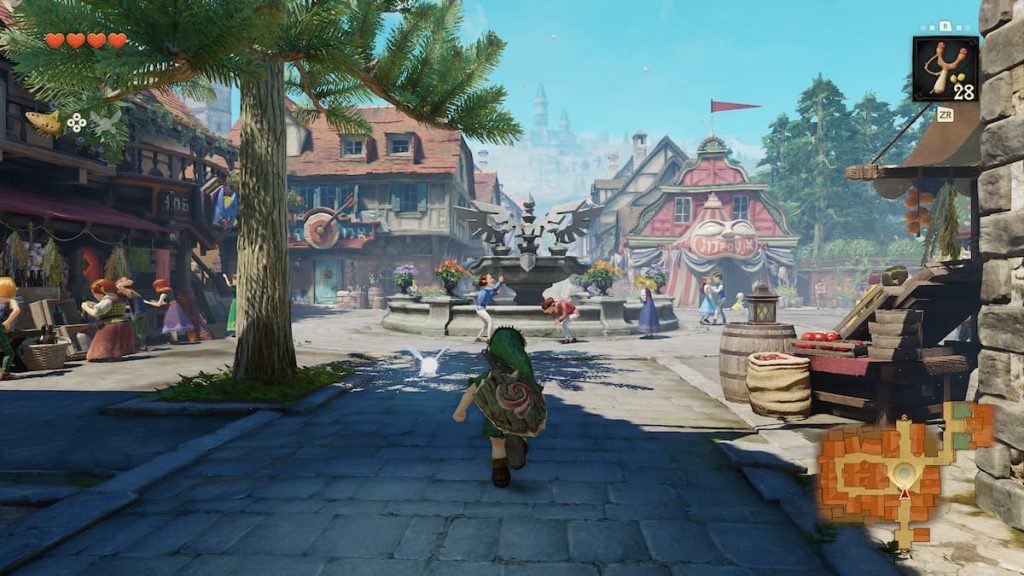
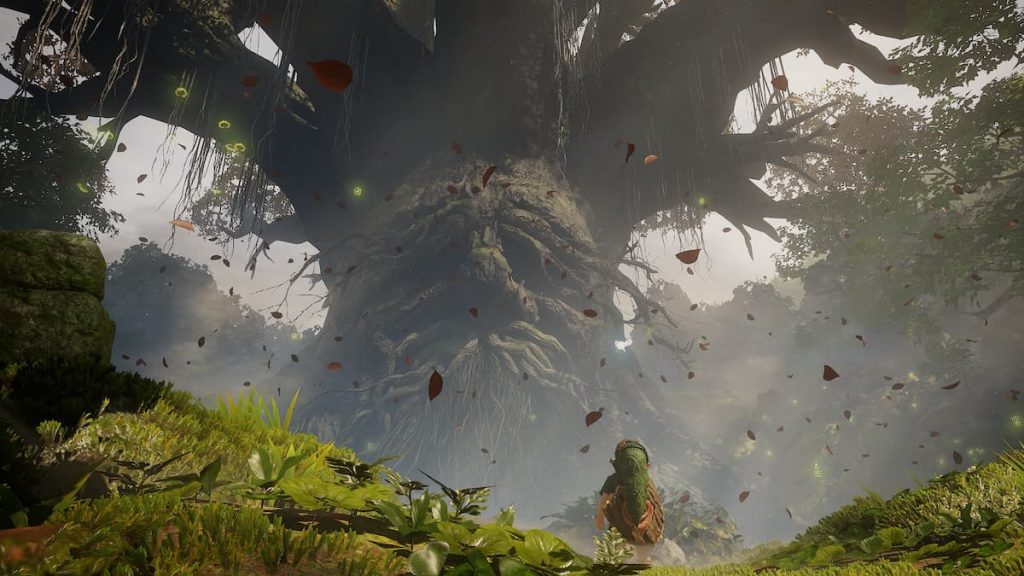
You mind may well have filled in the blanks when you were ten, and I don’t know if its a good thing or not that a lot of those blanks have now been filled with this abundance of detail — but, if nothing else, this remake stands as a fascinating glimpse at what the original vision may well have been. What was feasible then, versus what’s now possible today.
Visually this remake, with all its excessive and lush detail, evokes a true high-fantasy fairy tale style that sparks childhood imagination and wonder. The calls to ‘hire this man’ always came with the assumption that realism was the destination we should all be reaching towards. To think this remake is simply a garish reach for realising such realism misses the point: Nintendo was never on that journey.
Comments
Support Hanafuda Report
Comments are only available to members.
If you’d like to sign up to Hanafuda Club, click the button below: