
Sony recently announced plans to stop all production of new PlayStation discs starting in 2028.
It’s a decision that went down like a bucket of cold sick. Folks are not happy. A petition against the move passed 225,000 signatures within days.
As for me? Well, there’s an inexorable march to all of this, which meant I didn’t find myself particularly shocked. Over the past few days, I’ve been trying to work out just why I didn’t feel anything close to the clear outrage others were displaying. It all just kind of washed over me, the latest of yet another wave of bad gaming news to hit us all.
This unwanted news quietly confirms that the next PlayStation (which, by the way, does absolutely not need to debut anytime soon, but that’s another issue…) will not have a disc drive, ending Sony’s support for physical, disc-based console games.
This change will arrive over thirty years on from when Sony popularised the medium with the original PlayStation. They made it a new standard in the 90s, leaving Nintendo behind and appearing dated and frankly antiquated with their bulky (yet speedy) N64 cartridges.
Of course, Sony’s recent ill-timed announcement had some obvious inevitability to it all: we’ve been flirting with an all-digital future for years now, and digital storefronts have become well-established over the last twenty years. This isn’t a surprise. But that doesn’t mean folks have to be ok with having the alternative taken away. Even in 2026, in an age of Steam, streaming, and subscriptions, physical games still matter — and for a multitude of reasons.
This is well-worn territory, but having a real game in your hand still counts for something. It’s a tangible, physical manifestation of the effort behind it for one. More practically, of course, it should just work out of the box. You can lend it to a friend, pass it on to a sibling, or even sell it in order to help fund your next game — something that was wildly important to my younger self.
The ability to buy and resell physical games (which, despite what you may think, are often cheaper than going digital) enabled me to be exposed to far more titles than I otherwise would have been able to afford.
That same ability to see and experience the breadth of what this medium can really offer, exercised time and time again, matters not only for the players, but also for the industry at large. Each time a game gets passed on, or picked up second hand, it’s a fresh entry point for a new player — it’s a window of vital exposure that digital doesn’t really allow for. It’s a window that’s shrinking.
That said, I’ve had a somewhat inconsistent relationship with physical media over the past two decades or so.
Ever since I got my first iPod, I could kinda see where this was all heading. Sitting down to rip all of my Daft Punk CDs onto my PC, so I could then drag them over onto my click wheel iPod was novel at first. Yes, it made me intentional in my music choices, but it was also incredibly clunky.
This arduous process gave way to the convenience of buying tracks digitally in a single tap, and eventually ended up with me (and millions more) owning nothing — instead paying Apple and the like a monthly fee to rent music via streaming forever. It sounds kind of ridiculous when written down, an almost perplexing swap of pay forever, own nothing. Yet, the convenience trade — the promise of every song in your pocket — to some extent, felt worth it.
It was the same story with TV and movies. I hated looking at all the DVDs taking up space in my house. I’m not someone who gets anything out of seeing a row of boxes neatly lined up on a shelf. I don’t really want my house cluttered with plastic cases. So, I moved away from physical media there too.
Streaming my shows (and discovering new ones) felt an order of magnitude easier — but that’s the point. What started out feeling like freeing digital convenience slowly turned into a digital shackle. A nightly ritual of choice paralysis in which you stare at a wall of endless content, unsure where to turn. A TV show I wanted to watch could well vanish from a streaming service overnight without warning, but a disc sitting on a shelf in my living room could not suffer the same fate. It’s here where the sunny promise of digital starts to truly fade.
My journey with games was never so clear-cut though. Music and films? I was okay with turning to digital. With games, it was slightly more nuanced. I bought digital games, sure, but I also clung to that feeling of wanting physical games more so than I did with any other medium.
This wasn’t driven by any particularly strong nostalgia, but rather by pragmatism. I wanted to hold on to that freedom of choice that I enjoyed in my teenage years, of being able to get a game, see it through, and either sell it on or pass it on. That freedom has crystallised for me recently as my son has taken a keener interest in playing games. I can just hand him my copy of Super Mario 3D World on the Switch, and he can play it on his own device, without the need for an account, a login, or a hefty download. That is a big win. The same is true of my copy of Super Mario 64 — 30 years on, it still just works. No maintenance or server to worry about, no rug pull possible.
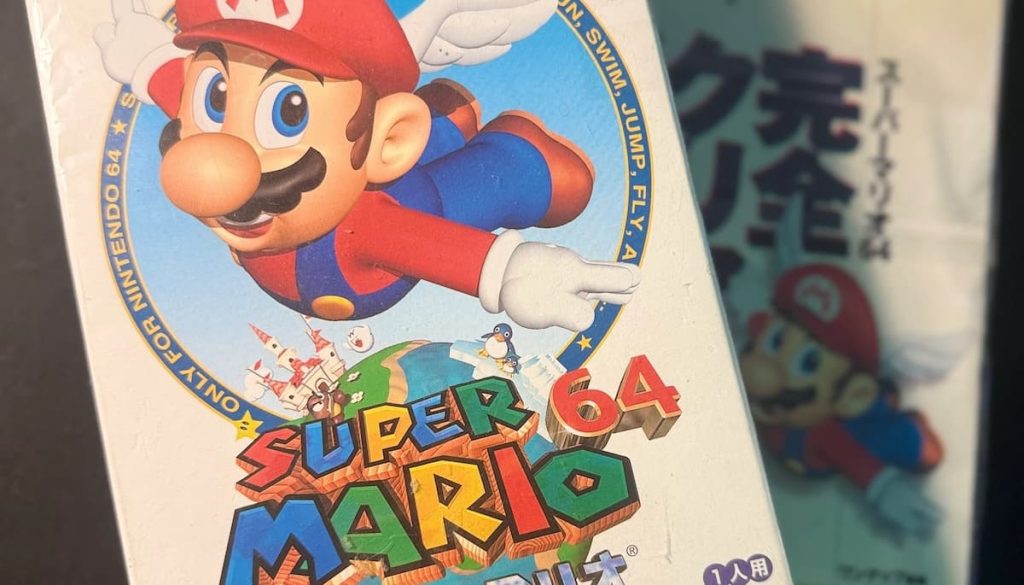
So, maybe there is a kind of nostalgia at play here somewhere. But it’s not nostalgia for a box on a shelf; it’s nostalgia for things simply working. Nostalgia for a time when I could put a game in a console, and it would just run. For not needing to place long-term trust in anyone’s server, anyone’s business decisions, or some executive’s goodwill. If that’s nostalgia, fine. But, it’s also just a reasonable thing to want.
Of course, the unfortunate reality is that even physical games aren’t truly physical anymore — with many acting as mere keys to unlock a download on a remote server somewhere. Even Nintendo has blurred the line with Switch 2 releases. It’s an awkward halfway house — but that tangible element of holding a disc or a cartridge in my hand is still a token of hope that a download just can’t offer. Maybe it’s a naive hope, but that’s where we’re at. Thankfully, some folks out there are still doing physical right.
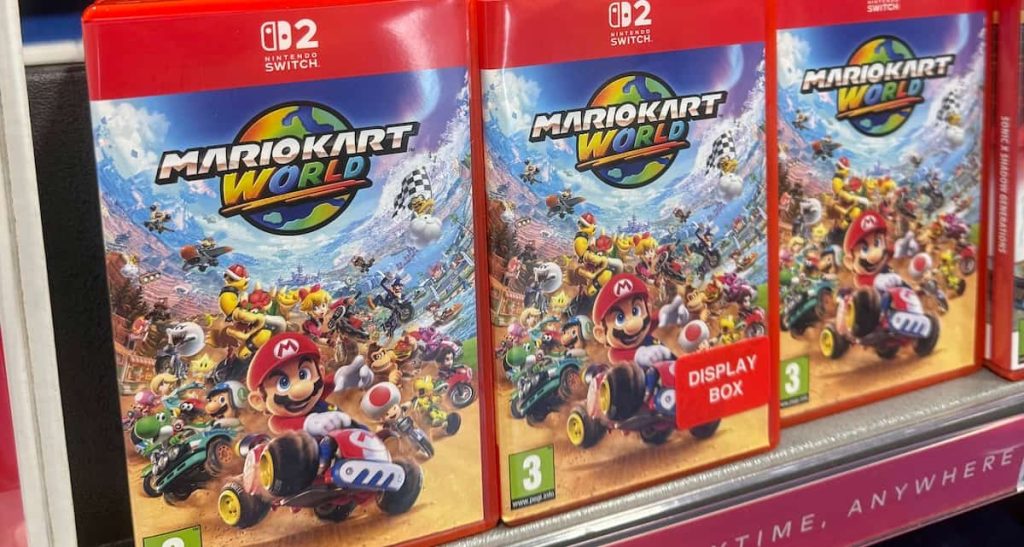
The ideals of going digital are admittedly appealing — I’ve got plenty of pals who’ve gone all in on digital game libraries. But the promise has never quite squared with the reality that one day, it will just be gone. Digital dust. And yet, I’ll probably end up buying more digital over time anyway. Not because I’ve changed my mind about any of this, just because that’s the direction of travel, and I’m not sure any of us are really swimming against it.
With Sony choosing to bow out of making discs, and Xbox in a colossal mess of their own, it looks like Nintendo will be the last console maker to offer games in a physical format that just works, no matter what.
Nintendo’s cartridge approach looked old-hat in 1996. In 2026, it may be the closest thing left to a last bastion of physical gaming.
Comments
Support Hanafuda Report
Comments are only available to members.
If you’d like to sign up to Hanafuda Club, click the button below: